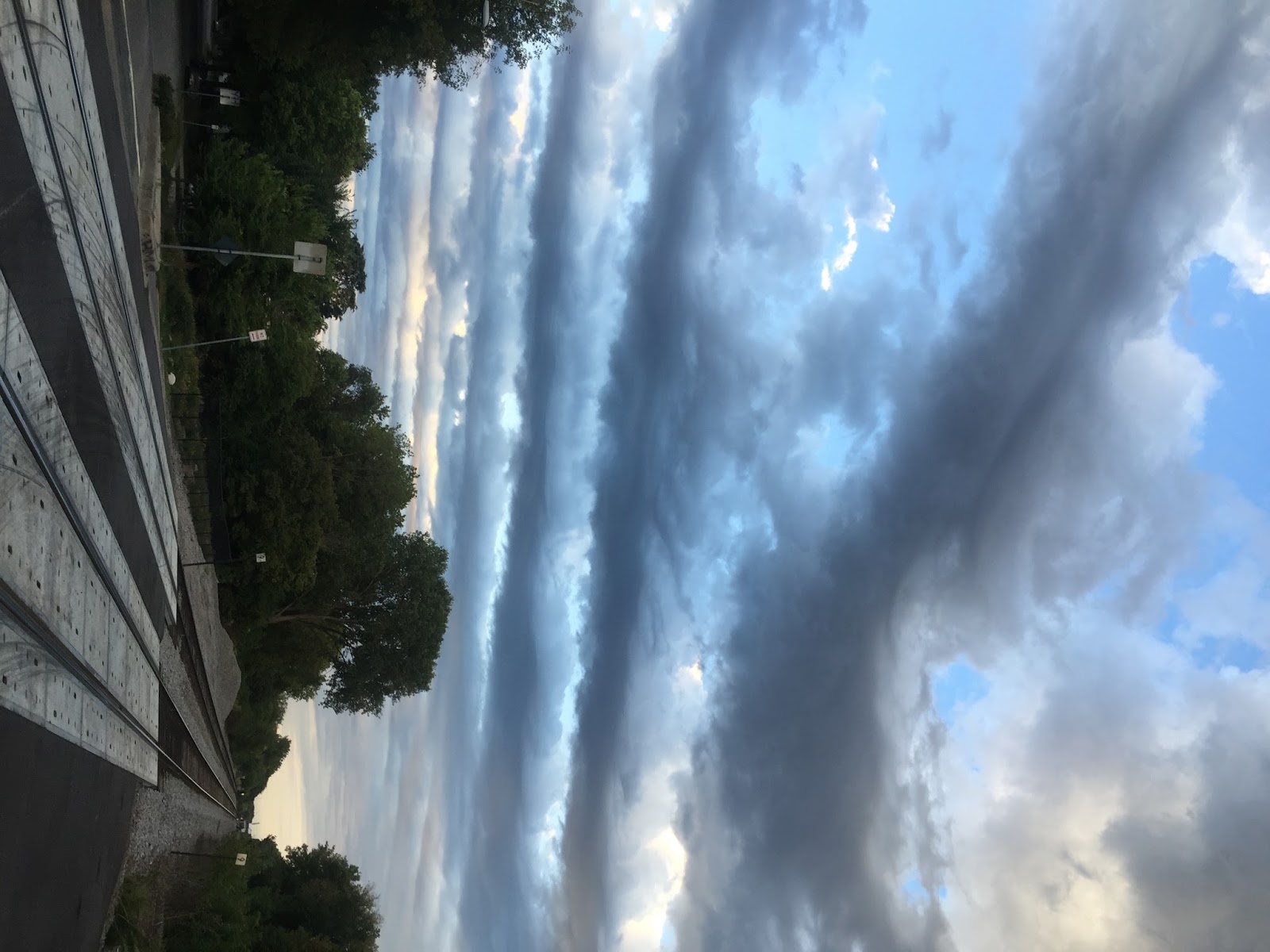
Wednesday, November 9, 2016
what america is
in march of this year i remember noting how warm it was. it was nice - sun on my skin, walking outside without a jacket. i thought that this is what it would look like: summer starting earlier and earlier until we reach the long summer at the end of the world. summer was long, stretching out an endless campaign until i was numbed to its depravity and senselessness.
this morning in minneapolis we had our first frost. for a few weeks i've enjoyed on my walk to work leaves lingering in the trees that looked like weightless flecks of gold, but they're gone now. around augsburg, the landscapers were weed whacking the flowers that the frost killed.
we know what america is now
Friday, October 21, 2016
kanye the mystic
my first few listens to the life of pablo left me disappointed that there wasn’t more kanye on it. in retrospect, i think what i meant was more of kanye rapping. i’m often guilty of not taking him seriously enough; this album is probably kanye’s most introspective, most reflective.
my position first changed when my friend gabe pointed out the lengths to which kanye had gone to obscure his voice. he seems to be almost hiding, composing collages of sounds behind the scenes. but then he doesn’t make the sounds either, does he. kanye’s great ability from my beautiful dark twisted fantasy on (as my friend adron told me) was to bring together great artists.
like with beyonce’s music, this mode of production draws the auteur question of filmmaking into music. this is a distinctly digital way of working, unique to a mode where recordings are assembled into music on computers. how much responsibility can we give kanye for the final product? is he actually creating, or is he just curating sounds?
kanye is a tastemaker. if not necessarily in fashion but in music his ability to make these collaborative albums renders kanye a kind of henry the navigator for the sonic landscape of the next few years. this tastemaking ability reminds me of two people: his wife, kim kardashian, and the man to whom he has frequently compared himself, steve jobs. both of these people take what has been made by other people and assemble it into something that people never knew they wanted until they had it.
consider, for tastemaking proofs, frank ocean’s distorted voices across blond(e). or perhaps look at the way frequent kanye partner justin vernon’s voice slowly transitions from vocoded distortion at the start of 22, a million, into clarity at the end. consider, again, the mystical adornments on the album cover.
there is something mystical about pablo. it begins with the ultralight beam, which can be understood as pure experience of divine and simultaneously as the overwhelming spotlight of fame. the troubling overlap of these things: the pursuit of mystical truth (resonating with aesthetic truth) and the pursuit of fame. can they be distinguished?
this tension pulls the album into its deeply introspective space. in doing so, it seems we retreat back to the very earliest episodes in the kanye myth. understanding the album requires an entire genealogy. there are many references to college dropout and late registration throughout the album, culminating in the story told on thirty hours. this story seems outside the kanye canon, about a long-distance relationship that didn’t work out. kanye’s verses, smooth at the beginning, break down into an aimless freestyling.
the beating heart of the album is probably i love kanye, though. an ironic reflection on the persona he has constructed, delivered in a raw beatless way. the attempt to reconcile celebrity culture and aesthetic mysticism is driven by his wondering about what is left when he attempts to transcend this persona, and whether or not he is trapped by fame.
Saturday, October 15, 2016
impermanence and the digital word
i’ve been crawling through walter ong’s Orality and Literacy for a while now, savoring it a few pages at a time. this is one of many luxuries being out of carleton has provided (though the tradeoff, that i have to wear business casual for 40 hours a week, has me wishing i could go back.)
one thing that has alternately amused & frustrated me is Ong’s focus on western scriptures and literature. i suppose it’s only to be expected - he was a jesuit priest and his book was published in the 80s. but my rudimentary knowledge of buddhist history gives me the sense that the development of this religion both tests and demonstrates for ong’s ideas.
the historical buddha lived sometime around the 5th century BC. we don’t know for sure, because nothing was written down. for four hundred years, the sayings of the buddha were maintained through recitation. the role of monks was always to maintain the teaching of the buddha for as long as they could. as the religion developed, becoming institutionalized and state-sponsored under the ashokan empire, its practices of recitation grew more sophisticated. no one monk could recite the entire canon - instead, it was scattered among many monks.
the stability of recitation that buddhists achieved meant that sutras could be effectively treated as texts. this enabled a kind of abstract analysis that ong associates with textual study, and resulted in the creation of the abhidhamma. where the sutras are essentially colloquialisms, the abhidhamma are the product of sustained, systematic philosophical thought. they take the teachings which were orally situated in the lifeworld of siddartha gautama and render them abstract, infinitely applicable, replicable. but this philosophy is still essentially oral in character: its written form isn’t treatises and arguments, but summaries and lists - what ong might call a memory aid.
once the scriptures get written down and buddhism develops into a more literatre religion, shit gets WILD. this is the origin of mahayana buddhism: the greater vehicle, which states that there are an infinite number of buddhas and bodhisatvas teaching in an infinite number of universes which are eternally going through cycles of growth and decay, anyone can write a new sutra and say it was revealed to them by a buddha, and so on and so forth. essentially: an already fruitful culture of oral abstraction, given widespread literacy and prosperity (and cultural contact with hellenism), rapidly blossoms into something bold and strange.
but even before this blossoming was the doctrine of impermanence. it’s pretty straightforward, as far as doctrines go: there is nothing permanent. everything material is subject to change. (the corollary being: don’t get too attached to what you’ve got.) as a metaphysical position it seems closely linked to, specifically, the transience of the spoken word. Ong attributes Plato’s philosophy of permanent metaphysical forms giving rise to our physical world to his literacy, but the illiterate religions of south asia took a different route
text isn’t as stable in 2016 as it was in plato’s day. the digital word can change when you’re not looking at it; it is produced and discarded on a whim. the physical referent for the word isn’t ink held on paper - it’s a sequence of stored charges that can only be interpreted by an elaborate device. we have very suddenly come into this paradigm, where written language can be treated with the disposability of spoken language. it has brought us to this churning boil of an election; who knows what other repressed demons it will bring forth.
Friday, October 7, 2016
authentically irrational
“we were struck with the fact that, in all the mass of material from which the record is composed, there is hardly one authentic document!”
the novel dracula ends on this ominous note. the vampire is eradicated, england is safe, and transylvania has become a pleasant tourist destination. but the authenticity of the record of the conflict is left hauntingly ambiguous.
“the vampire is dead, you idiot,” a man made entirely out of straw attempts to tell me. “that’s all that matters.” you don’t know how wrong you are, straw man. after all, documentation is central to dracula. the entire novel is composed of documents composed by the main characters. they’re created chaotically at first but the latter half of the novel sees them regimented and used as the first line of defence against dracula. documentation, in this novel, is control.
this regimentation, however, also changes the form of the documents they produce. they move away from modes that more thoroughly or purely capture their subjective experience: Jonathan Harker writes a diary in a shorthand script that only he & his beloved can read; Dr. Seward speaks into a phonograph that records his voice on wax cylinders - but is totally unsearchable, and illegible without mechanical interpretation.
one part of the action of regimentation is mina’s transcription of these documents. she converts unreason into reason with her typewriter, translating every encoded word or emotion-imbued phoneme into the controlled, interchangeable letters of type. she also duplicates the records several times.
replication and interchangeability: the hallmarks of reason. atheistic materialism organizes desire through these rational principles. if it can’t be replicated and sold somewhere else, to anyone else, then it can’t exist. but like jonathan harker, reviewing the copies without origin, ppl have grown anxious about authenticity.
to a degree the idea of a product or place or experience being ‘authentic’ is a construction of savvy marketers. but they didn’t make the anxiety about authenticity; they’re only responding to it.
the craving for what is authentic is a craving for what cannot be or has not been replicated; something that has an origin beyond the black box of mass production. it is a desire for a feeling of location that reflects subjectivity. it is a desire for a truth born out of history, not engineered by marketers. it is irrational and undefinable precisely because it exists to demarcate a space where reason cannot enter and begin making copies.
recommended reading Annihilation (Jeff Vandermeer) Mass Authentic (Rob Horning) Village Atheists, Village Idiots (Sam Kriss)
the novel dracula ends on this ominous note. the vampire is eradicated, england is safe, and transylvania has become a pleasant tourist destination. but the authenticity of the record of the conflict is left hauntingly ambiguous.
“the vampire is dead, you idiot,” a man made entirely out of straw attempts to tell me. “that’s all that matters.” you don’t know how wrong you are, straw man. after all, documentation is central to dracula. the entire novel is composed of documents composed by the main characters. they’re created chaotically at first but the latter half of the novel sees them regimented and used as the first line of defence against dracula. documentation, in this novel, is control.
this regimentation, however, also changes the form of the documents they produce. they move away from modes that more thoroughly or purely capture their subjective experience: Jonathan Harker writes a diary in a shorthand script that only he & his beloved can read; Dr. Seward speaks into a phonograph that records his voice on wax cylinders - but is totally unsearchable, and illegible without mechanical interpretation.
one part of the action of regimentation is mina’s transcription of these documents. she converts unreason into reason with her typewriter, translating every encoded word or emotion-imbued phoneme into the controlled, interchangeable letters of type. she also duplicates the records several times.
replication and interchangeability: the hallmarks of reason. atheistic materialism organizes desire through these rational principles. if it can’t be replicated and sold somewhere else, to anyone else, then it can’t exist. but like jonathan harker, reviewing the copies without origin, ppl have grown anxious about authenticity.
to a degree the idea of a product or place or experience being ‘authentic’ is a construction of savvy marketers. but they didn’t make the anxiety about authenticity; they’re only responding to it.
the craving for what is authentic is a craving for what cannot be or has not been replicated; something that has an origin beyond the black box of mass production. it is a desire for a feeling of location that reflects subjectivity. it is a desire for a truth born out of history, not engineered by marketers. it is irrational and undefinable precisely because it exists to demarcate a space where reason cannot enter and begin making copies.
recommended reading Annihilation (Jeff Vandermeer) Mass Authentic (Rob Horning) Village Atheists, Village Idiots (Sam Kriss)
Friday, September 30, 2016
haha, oops
hmmm looks like there's no good post for today! sorry about that. i don't want this to become a habit but it's friday and i've got nothing to post. so here's guy fieri in his aged manifestation, ready for death to take him
if you're wondering what happened to the content i was planning to put up here today, please refer to this explanatory diagram:
Friday, September 23, 2016
partial visions from my subtle body
there are things you cannot photograph with an iphone camera. its makers cannot embed a human eye in a metal frame, or generate a mind from silicon. the capitalists of silicon valley will never create a fleshless human. even their algorithms are parodic homonculi dumbly failing to anticipate whimsy. such creations are always tools, never individuals. a human draws humanity not from a mind, but from relations between mind and body, body and other, other and mind.
what, then, happens to the moonlight that is delicately striated by my window blinds? i point my third eye at it and i am blind. i put it away and sight returns: here is beauty draped over my wall.
i am a compulsive photographer, rather than a professional. my unconscious desires attract me to more or less the same things as in illustrations: clear lines, dense patterns, bold colors. my instagram displays the better results of this habit, but only scrapes the surface. most of the photographs i take are filed away mercilessly, never to be seen again.
the pleasure of these photographs is not their memorable qualities, or any intent of mine to review what i have taken. perhaps in the immediate afterglow i might stop to admire the emergence of beauty in this new object, retrace the lines and colors with my eyes. but it is the act itself that feels good. taking a picture, i steal false permanence from an always shifting world. chaotic ephemera is stablized into structure, pointlessly, endlessly. it is like building a cathedral which is governed only by math, not physics, and which stretches out endlessly into intricate wings and arches.
but what, then, happens to the color of light pollution glowing orange against the clouds? the warmth of an entire city, dimly reflected into my eyes. what happens to subtle beauties that my camera does not care about?
i suppose that’s what my keyboard is for
Friday, September 16, 2016
communication and reality
if you haven’t guessed by now i’m a bit fascinated by communication technology at the moment. i suppose its understandable, given how much of the strangeness of 2016 feels like its the result of everyone having the internet in their pocket. or does it just feel that way because i get all my news through my pocket internet?? who knows
did you know that cities in germany with at least one printing press by 1500 were 29% more likely to be protestant by 1600 than those without? That’s just one example of power structures rapidly changing in sync with rapid shifts in the information infrastructure.
Another is the enlightenment - only here the technology is the same, still the printing press, and what’s changing is the values driving what becomes widespread. What’s published in the enlightenment isn’t following the old, religious/feudal value system of the church. Now it follows the value system of the market: popular demand decides what gets the widest distribution, what has the broadest impact. This is the era of the novel, and it culminates in those great revolutions of popular demand, American, Haitian, French. This is the information paradigm out of which our american government emerged.
at the beginning of the 20th century you see the rise of what Walter Ong calls ‘secondary orality’ - the ability to record and transmit the human voice at great distances and to large audiences, a transition Ong links to the rise of fascism. I don’t know anything about that, but I can tell you this: a popular art form makes a transition to ‘high art’ when its medium has becom outdated and irrelevant. this was the anxiety of the modernist novelists. print was no longer the central technology of mass communication, but they had still deeply internalized its forms. (this is also the description of the modernists that leads into my argument for lovecraft as a modernist, but thats for another time.)
Now we see a new shift, from the centralization of television to the hyperliteracy of the internet. the affordances and weaknesses of this new medium will shape the next century, assuming it doesn’t get promptly replaced by something else. This, i guess, is why i’m so interested in learning more about it: i want to read the future.
did you know that cities in germany with at least one printing press by 1500 were 29% more likely to be protestant by 1600 than those without? That’s just one example of power structures rapidly changing in sync with rapid shifts in the information infrastructure.
Another is the enlightenment - only here the technology is the same, still the printing press, and what’s changing is the values driving what becomes widespread. What’s published in the enlightenment isn’t following the old, religious/feudal value system of the church. Now it follows the value system of the market: popular demand decides what gets the widest distribution, what has the broadest impact. This is the era of the novel, and it culminates in those great revolutions of popular demand, American, Haitian, French. This is the information paradigm out of which our american government emerged.
at the beginning of the 20th century you see the rise of what Walter Ong calls ‘secondary orality’ - the ability to record and transmit the human voice at great distances and to large audiences, a transition Ong links to the rise of fascism. I don’t know anything about that, but I can tell you this: a popular art form makes a transition to ‘high art’ when its medium has becom outdated and irrelevant. this was the anxiety of the modernist novelists. print was no longer the central technology of mass communication, but they had still deeply internalized its forms. (this is also the description of the modernists that leads into my argument for lovecraft as a modernist, but thats for another time.)
Now we see a new shift, from the centralization of television to the hyperliteracy of the internet. the affordances and weaknesses of this new medium will shape the next century, assuming it doesn’t get promptly replaced by something else. This, i guess, is why i’m so interested in learning more about it: i want to read the future.
Subscribe to:
Posts (Atom)